

Construction Green Nets: Frequently Asked Questions & Buyer Guide
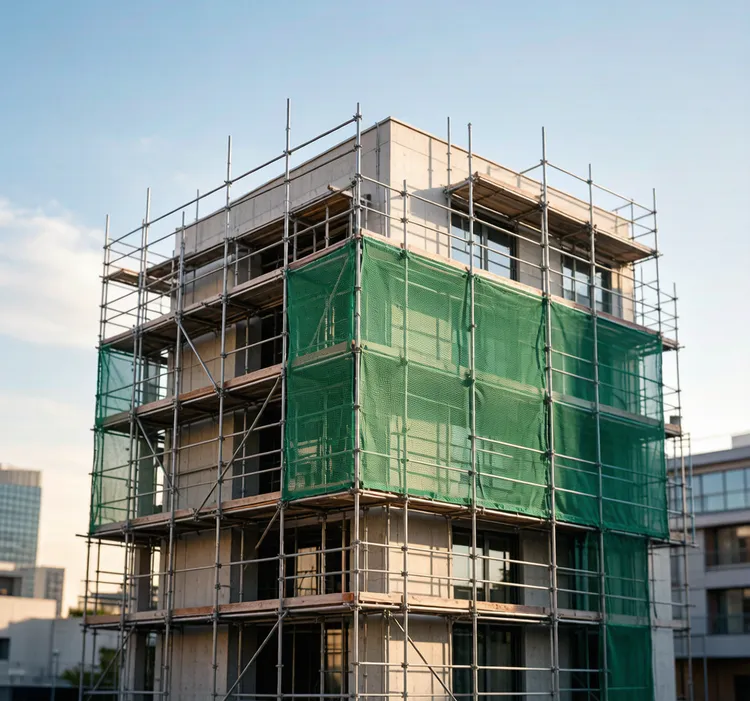
Essential for job site safety, dust control, and worker protection, construction green nets wrap scaffolding structures on modern commercial and residential projects. Below are expert answers to the most common questions regarding materials, weather performance, and site compliance.
Key Frequently Asked Questions & Technical Specifications
What materials are construction green nets made from?
High-grade green safety netting is manufactured from 100% virgin High-Density Polyethylene (HDPE) infused with 3% to 5% UV stabilizers. This chemical treatment prevents polymer degradation under high UV exposure, giving the netting a continuous outdoor operational lifespan of 3 to 5 years even in intense sunny climates.
What is the difference between knitted and woven green nets?
Knitted green nets use interlooping monofilaments to deliver 60% to 80% shade density, excellent tear resistance, and high flexibility—making them the industry standard for scaffold dust containment on high-rise residential towers. Woven green nets use perpendicular interlacing, providing extreme tensile strength (often exceeding 1,500 N/5cm) suited for heavy-duty perimeter barriers and load-bearing debris control.
Can green safety netting withstand severe weather and high winds?
Yes. High-density scaffold netting is specifically engineered to reduce wind velocity on high-rise construction sites by 50% to 60%. By allowing controlled air ventilation, these nets mitigate dangerous wind load drag on temporary scaffolding frames during coastal storms, complying with international site safety standards such as EN 1263-1.
Do construction green nets provide rain protection?
No. Green nets are porous to maintain airflow and catch falling tools, masonry chips, and airborne dust. While heavy-density meshes break incoming torrential rain into a fine mist, they are not waterproof membranes and should not be relied upon as primary rain barriers for moisture-sensitive building materials.
How frequently should workers inspect green nets for damage?
Per OSHA and European site safety regulations, green nets should undergo visual inspections daily before every work shift, as well as immediately following severe windstorms. Catching minor abrasions, chemical spills, or mechanical tears early prevents catastrophic net failure when retaining falling debris.
Are green nets reusable across multiple construction projects?
As long as the netting passes pre-use tensile and wear checks, high-quality HDPE netting is fully reusable across 3 to 4 typical project lifecycles. Properly dismantling, cleaning, and storing shade netting between job phases can cut contractor site consumable costs by up to 30%.
Upgrade Your Site Safety Standards Today
Investing in certified HDPE construction green nets ensures job site compliance, protects surrounding pedestrians, and controls environmental dust. Contact our site equipment specialists today to request custom roll dimensions, density specifications, and factory direct pricing for your upcoming building project.